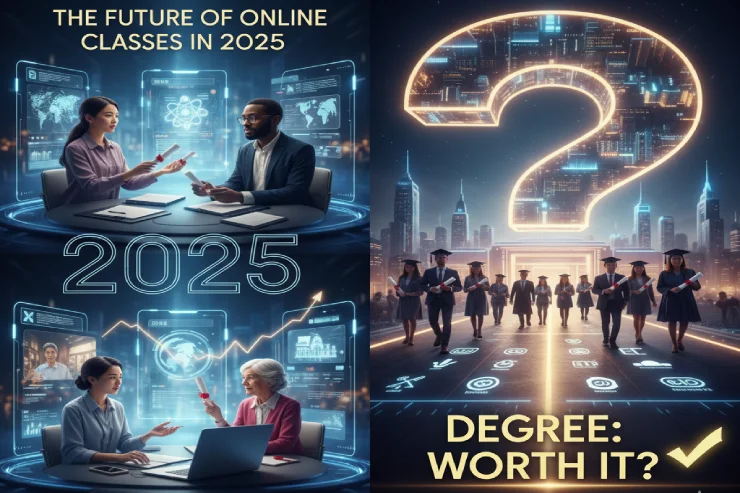
Learning today is changing faster than ever, and technology is the main reason. Then came COVID-19, and everything just sped up. Suddenly, online classes weren’t optional; they became the new normal. Now, most students actually prefer them over traditional ones. It’s flexible. You can join lectures from home, work a bit on the side, and still handle your personal life. It makes things easier, or at least that’s the idea.
This kind of flexibility pulls in everyone: high school grads, people working full-time, and even those thinking of switching careers. But here’s the catch: with so many online degrees out there, it’s easy to feel lost. Is it really worth it? Does it actually carry weight for your career? And what about quality; can you trust what you’re getting? These questions keep bouncing in your head.
That’s why this guide exists. We’re going to break down the pros and cons of online degrees, look at the return on investment, and see how it can affect your career. By the end, you’ll have a clearer idea about whether an online degree actually fits your goals and life right now.
Who Benefits Most from Online Degrees
Online degrees provide different benefits to different students. Some students need the flexibility of online classes so they can work while studying. Some students are exploring different subjects so they can take online classes while taking their college courses. Below are the people who benefit from online degrees.
-
Working Professionals and Career Changers
People who have jobs or have to take care of their families cannot commit to regular classes. Online classes give them the flexibility to take the class at a time they want. People who also want to change their careers can only take classes on weekends. Online degrees are a lifesaver for these people.
-
Recent High School Graduates
Fresh graduates often want freedom and choice. Programs like accounting classes in college give options you won’t always find locally. You can study at top universities worldwide. You learn without moving or giving up your other plans.
-
Lifelong Learners and Skill Upgraders
Adults updating skills face pressure, too. Industries change fast, and staying relevant is hard. Online programs help learners catch up in technology, business, or science. You can explore new fields or sharpen skills without leaving work behind. It’s a way to keep learning while life goes on.
Pros of Online Degrees
Online degrees have grown popular due to the different advantages they give students. It gives different options that fit different goals, schedules, and learning styles. Here are some advantages of online degrees.
-
Flexibility and Convenience
The flexibility and convenience that online classes provide cannot be found anywhere. Those individuals who have busy schedules and can only take out different free hours benefit the most from online degrees. Even a complex online physics class feels easy when you understand it at your own pace.
-
Cost Savings
Online degrees often cost much less than traditional programs. You save on tuition, dorms, commuting, and other campus fees. Some programs, like online MBA classes free, give high-quality lessons at minimal cost. Saving money makes education accessible while you keep working or supporting your family.
-
Skill Development
Online programs teach more than theory. You gain digital, technical, and career-ready skills. You learn time management, online collaboration, and tech tools. These skills help in jobs now and in future career growth.
-
Global Networking Opportunities
In online degrees, the peers and the instructors can be from all over the world. So, when you have any projects, discussions, you get the chance to network with people from diverse backgrounds. Such degrees can open doors for opportunities and collaborations right from your home.
Cons and Limitations of Online Degrees
Online degrees are helpful for many students, but they are not perfect. What feels easy for one student can be stressful for another. Some parts of online learning are still not as strong as traditional education. Below are a few common challenges students face when taking online degrees.
- Requires Self-Discipline
Online learning gives full freedom, but that also means you must manage yourself. There are no teachers reminding you to study or friends helping you stay on track. You have to plan, focus, and keep up with deadlines on your own. Some days it feels simple, but other times, it can get overwhelming. - Limited Hands-On Practice
Not every subject can be fully learned online. Courses like nursing, lab sciences, or engineering require in-person practice to understand things better. Watching videos or doing virtual labs helps, but it’s not the same as real practice. - Fewer Networking Opportunities
It’s harder to build connections when you study online. You can still meet people through chats and group projects, but the experience is different. The casual talks, group studies, and friendships that grow on campus don’t happen easily in virtual classes. - Mixed Employer Perception
Even though online degrees are becoming more respected, some employers still prefer traditional ones. They might think online courses are easier, even if that’s not true. The good part is that this mindset is slowly changing as more students succeed with online degrees.
Cost and ROI
When students wonder if an online degree is truly worth it, the first thought that comes is the cost. These programs sound affordable and flexible, but what really matters is whether they pay off in the long run. The answer usually depends on how well your degree fits your career goals and personal growth.
- Tuition and Hidden Costs
Online degrees are often cheaper than traditional college programs. You save money on rent, meals, and travel. But sometimes, schools add extra fees for software, exams, or materials. It’s smart to check every detail before enrolling so you know the real cost from the start. - Earn While You Learn
One of the best things about studying online is that you can keep working. You can earn an income, gain experience, and avoid heavy loans. Even advanced learners often wonder, Do PhD students take classes online too? The truth is, many do — because online learning makes it easier to balance work, research, and studies at the same time. - Career Advancement
If your goal is to grow in your field, an online degree can be a great investment. Many graduates move up faster, land better roles, and enjoy higher salaries. The skills and flexibility you gain often turn into long-term professional benefits. - Beyond Money
Sometimes, the true value isn’t just in numbers. Many students find confidence, focus, and balance through online learning. When your degree helps you improve your mindset and career, that’s when you realize it was worth every bit of effort.
The Future of Online Degrees
Online degrees have grown fast, but students still wonder if they will hold value in the coming years. Technology, employer expectations, and flexible learning options all affect how useful these programs are.
-
Changing Employer Attitudes
More companies now value skills and results over where a degree came from. Accredited online degrees are increasingly respected. Your learning, not the location, matters most.
-
Flexible and Lifelong Learning
Online programs allow students to keep working while studying. High school graduates, professionals, and career changers can upskill without pausing life. This flexibility adds practical value.
-
Real-World Skills Matter
Employers look for digital literacy, time management, and practical knowledge. Online classes, such as an online physics class or accounting classes in college, build these skills.
-
Choosing the Right Program
Even in 2025, value depends on the school, accreditation, and course relevance. A well-chosen program ensures your degree is respected and useful.
Online degrees are not just convenient—they can remain a smart investment if chosen carefully.
Conclusion
As we move through 2025, online education continues to reshape how students learn and grow. Degrees earned online still hold strong value, but that value depends on how you use them. The future belongs to those who study with purpose, manage time wisely, and choose programs that actually support their goals.
Yet, online learning isn’t always smooth. Many students still struggle to balance work, life, and classes. Some even turn to online class help or consider getting someone to take my online course for me when things get tough. That’s okay — what truly matters is finding balance and staying consistent. In the end, online degrees remain worth it when they help you grow not just in your career, but also in confidence and direction.
FAQs
What advantages do online degrees have in 2025 compared to traditional ones?
They offer flexibility, lower costs, and faster completion options. Many now include live sessions and industry-recognized projects, making them as credible as on-campus degrees.
What future trends are shaping online degrees in 2025?
AI tutors, virtual internships, and skill-based certifications are changing how students learn and prove their skills.
In which situations is an online degree especially worth it?
It’s ideal for working professionals, parents, or anyone needing a flexible study schedule.
How do I evaluate if an online degree will be “worth it” for me?
Compare tuition, accreditation, course quality, and job outcomes. Always check student reviews before enrolling.